The Perlin Noise (Ruido Perla)
Feature still gallery-12-scaled Documentation
Project
The Perlin Noise (Ruido Perla)
The sound objects represent for me the place between objectivity (of a seed) and the longing for the unknown (the mystical through the ritual). Although I grew up in South America and had some mystical experiences, everything remains unknown and far away. With my migration to Germany, the memories were trivialized on the one hand, and on the other hand, another perspective emerged, which I can only attribute to simulation.
— Luis Negrón van Grieken
Ruido Perla (2022)
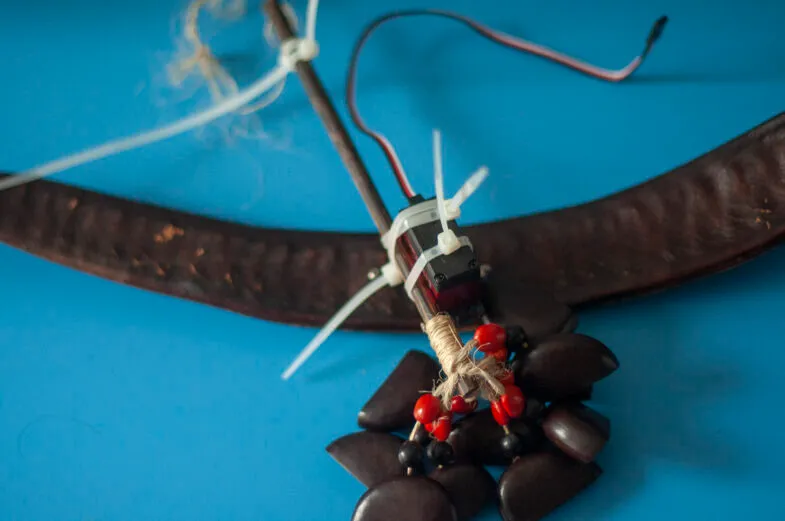
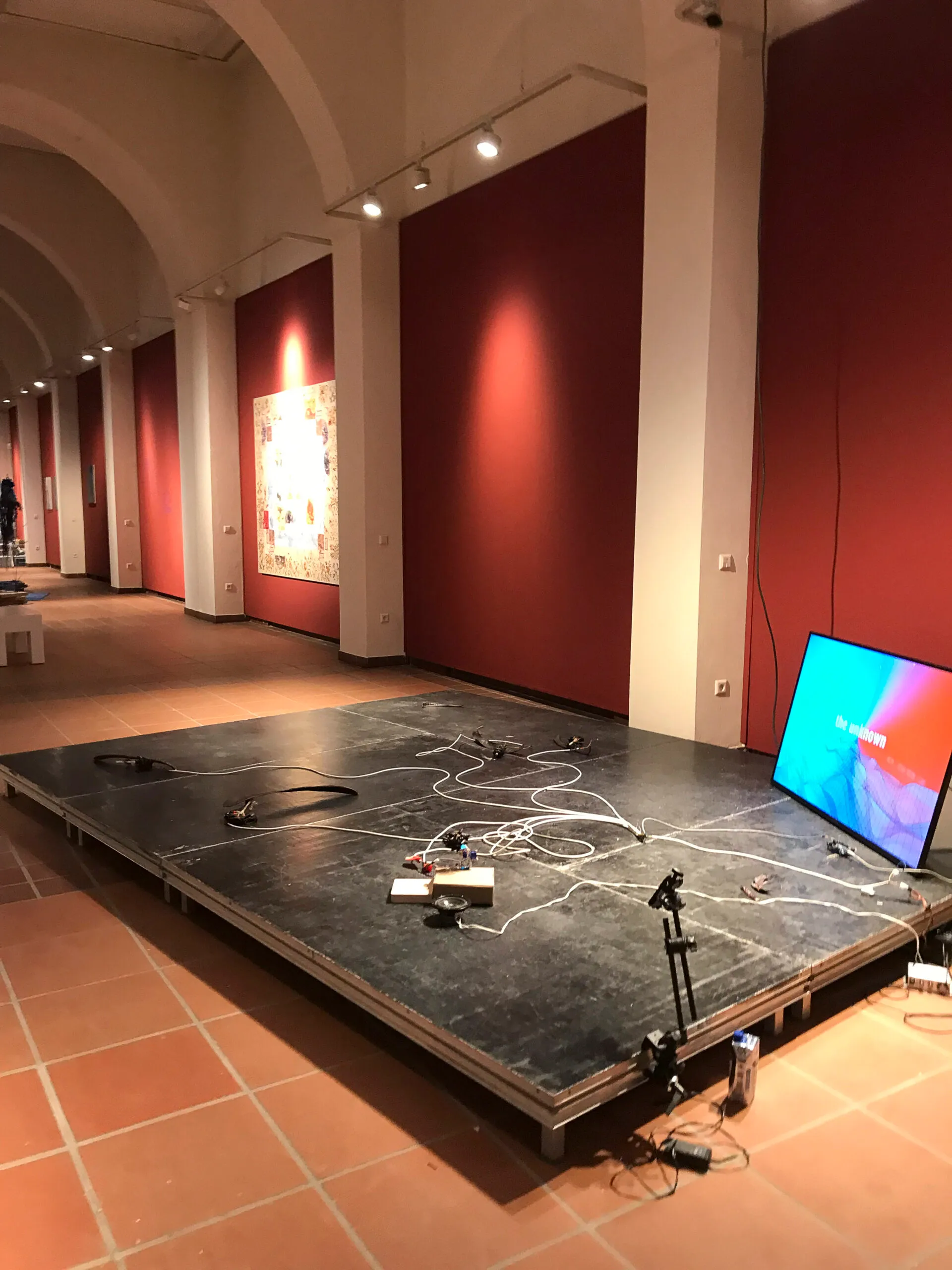
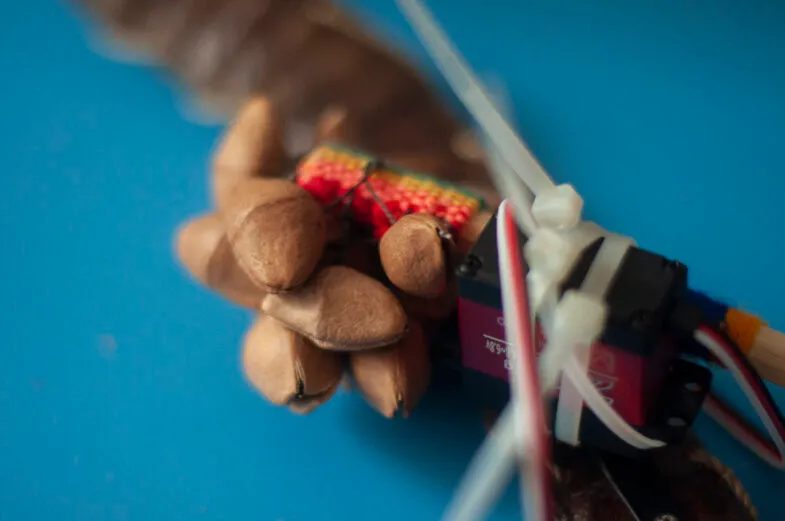
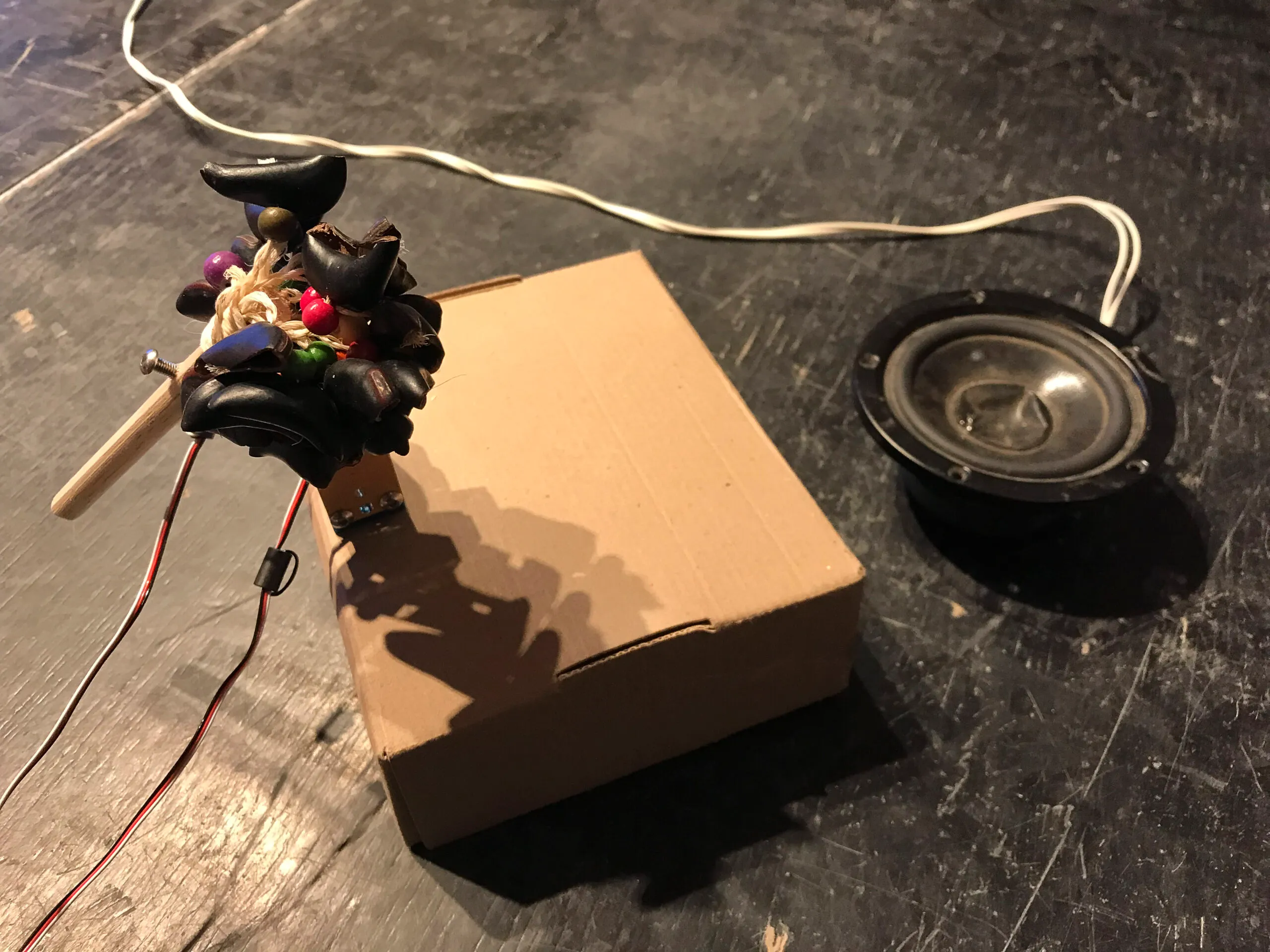
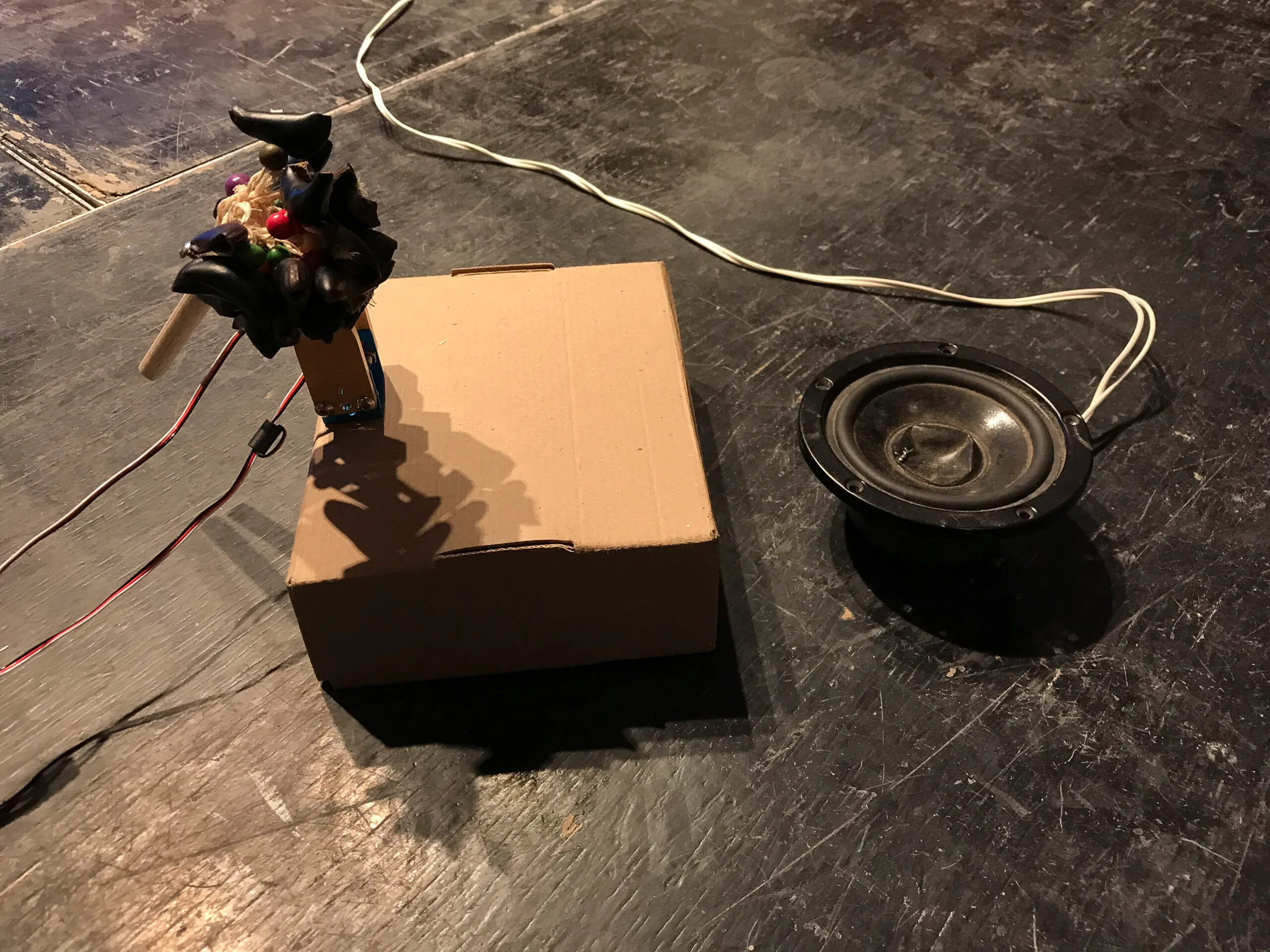
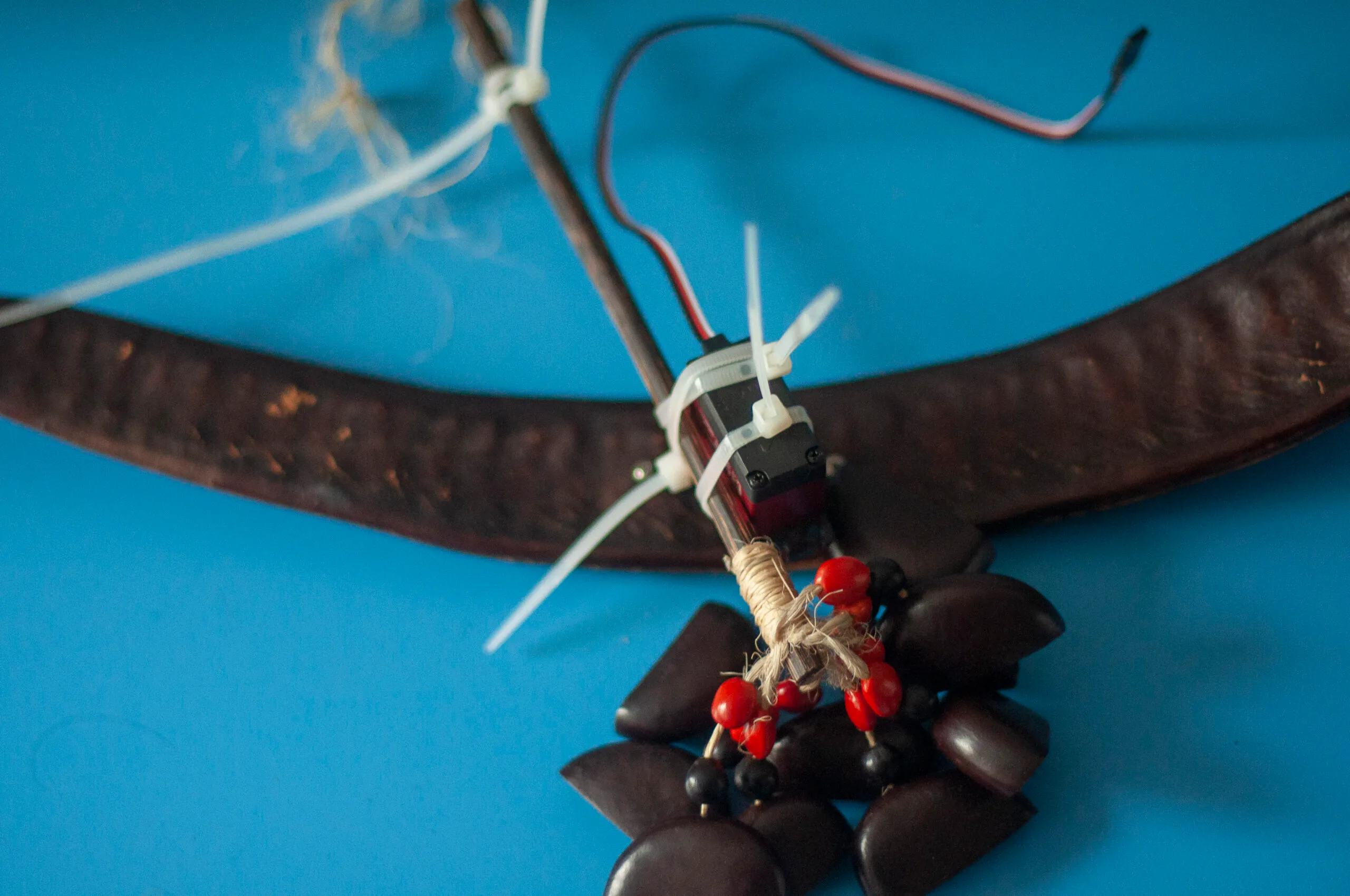
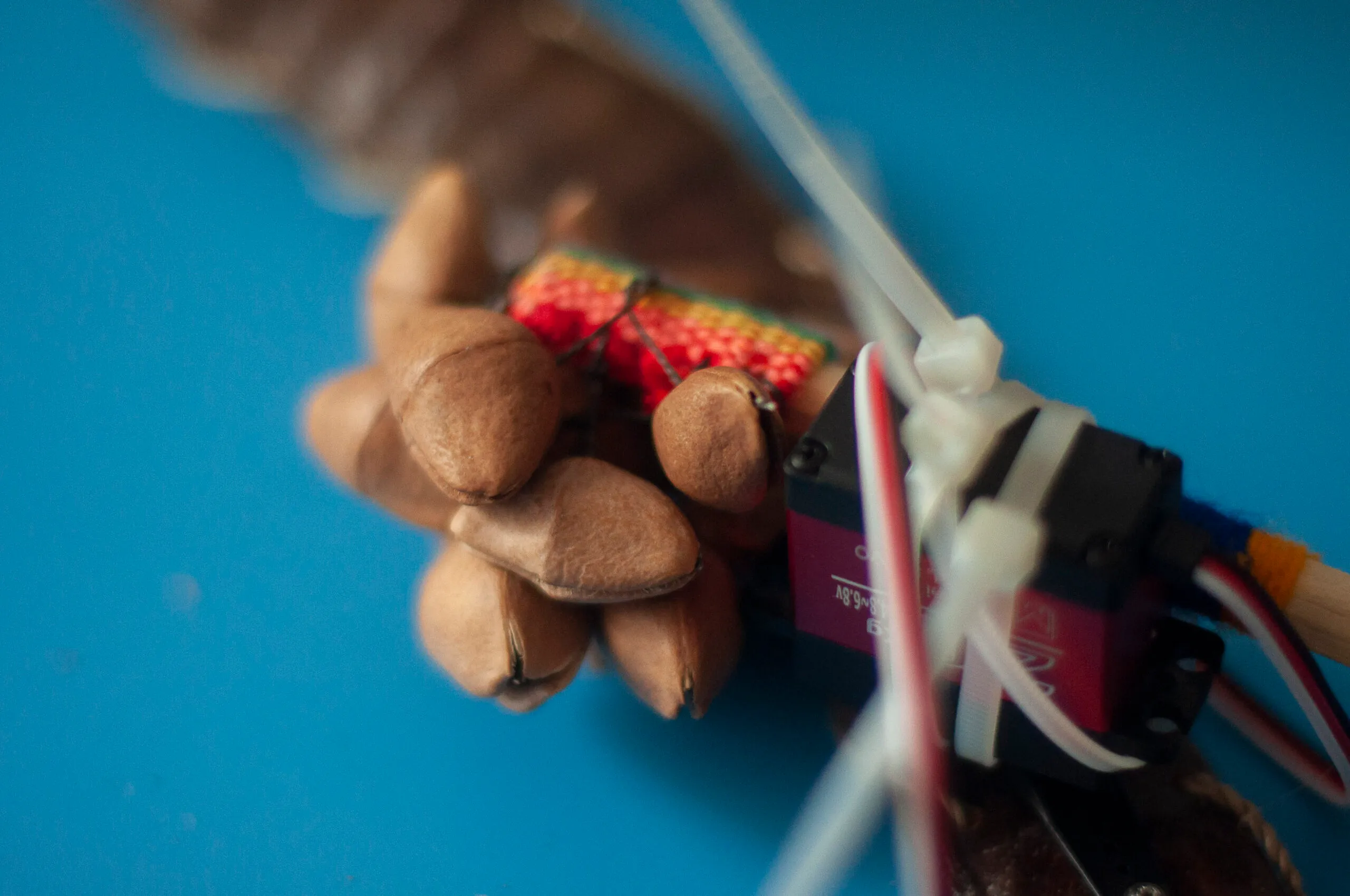
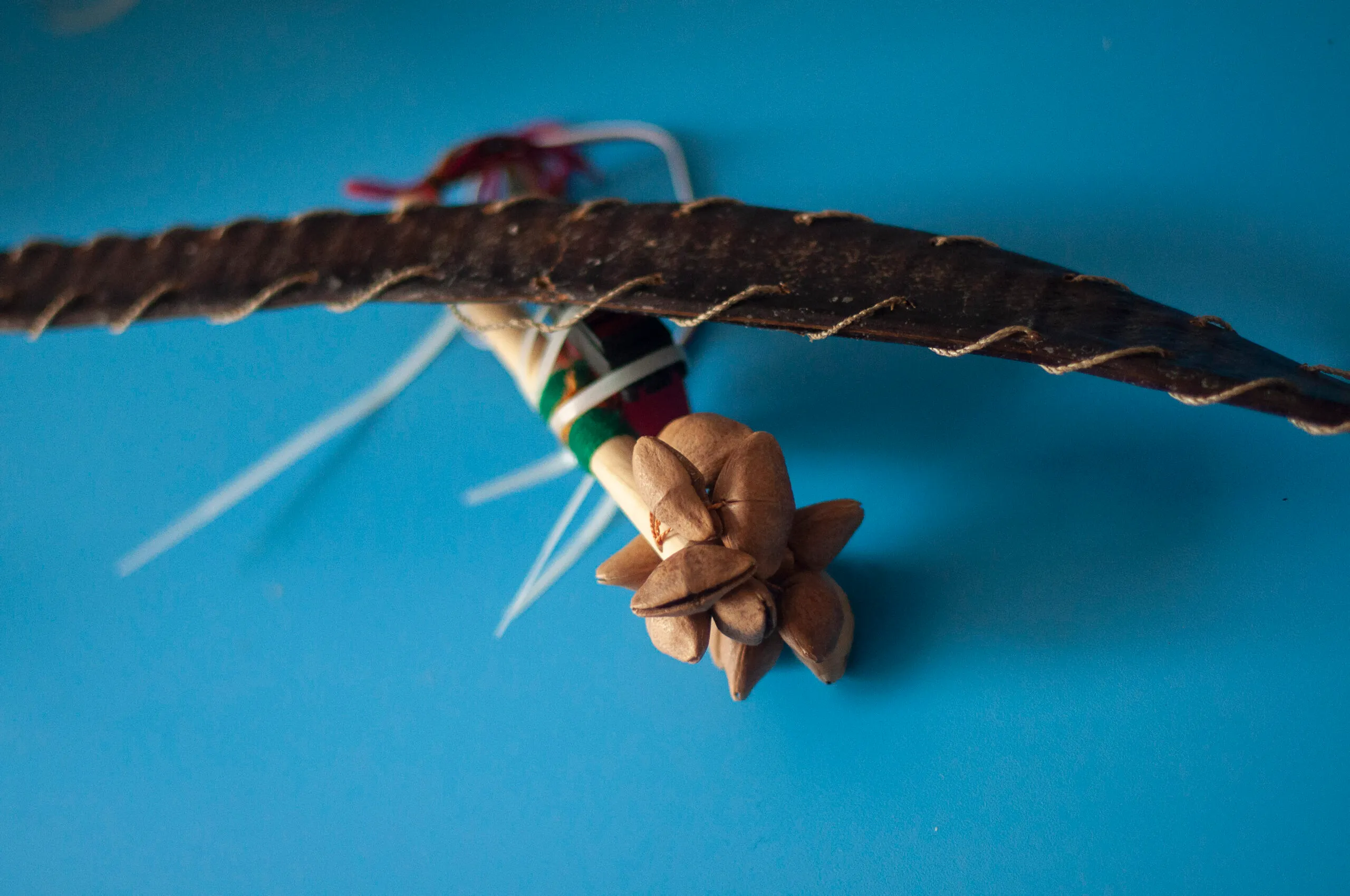
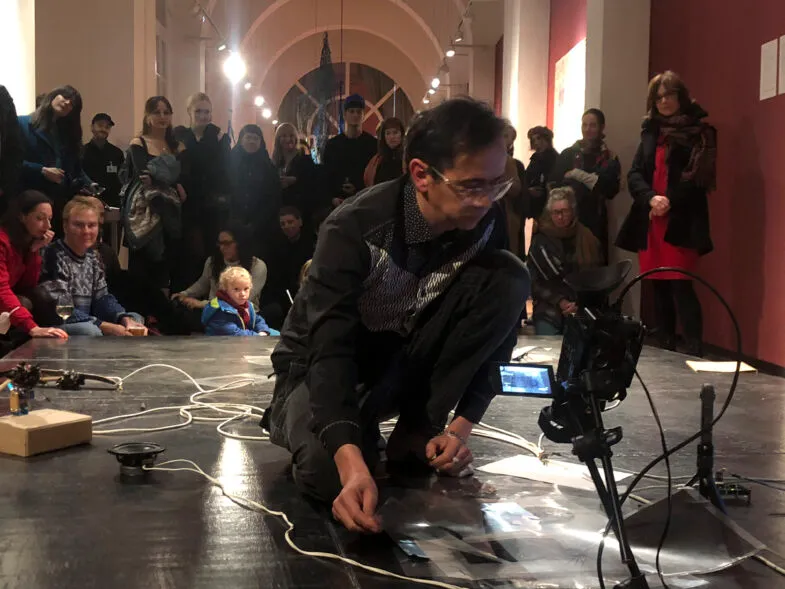
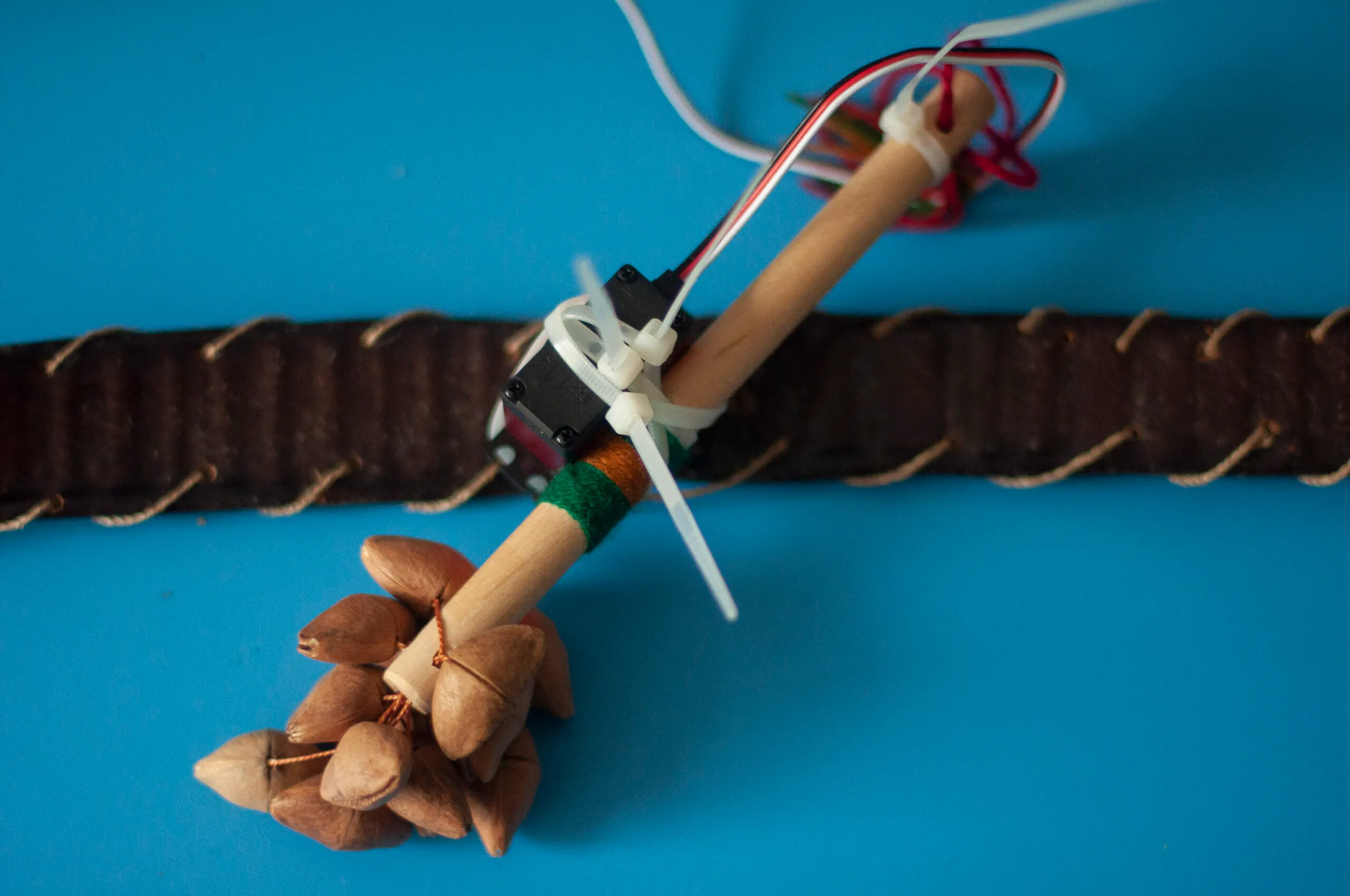
Kinetic sound installation Servo motors, Java code, Arduino, computer, monitor, cables, loudspeakers, dried flame-tree seedpods, rattles from the Amazon — 7 mini robots
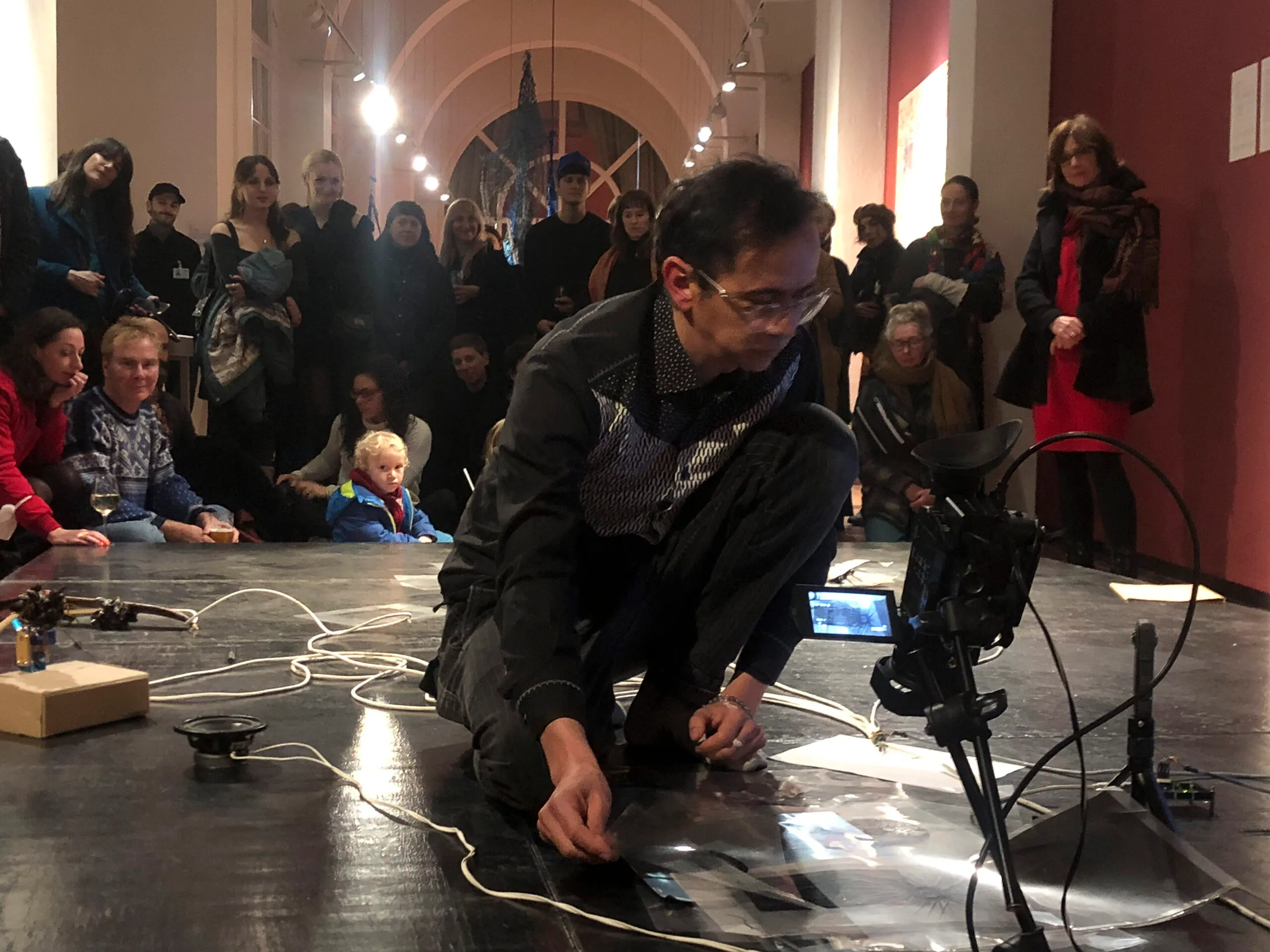
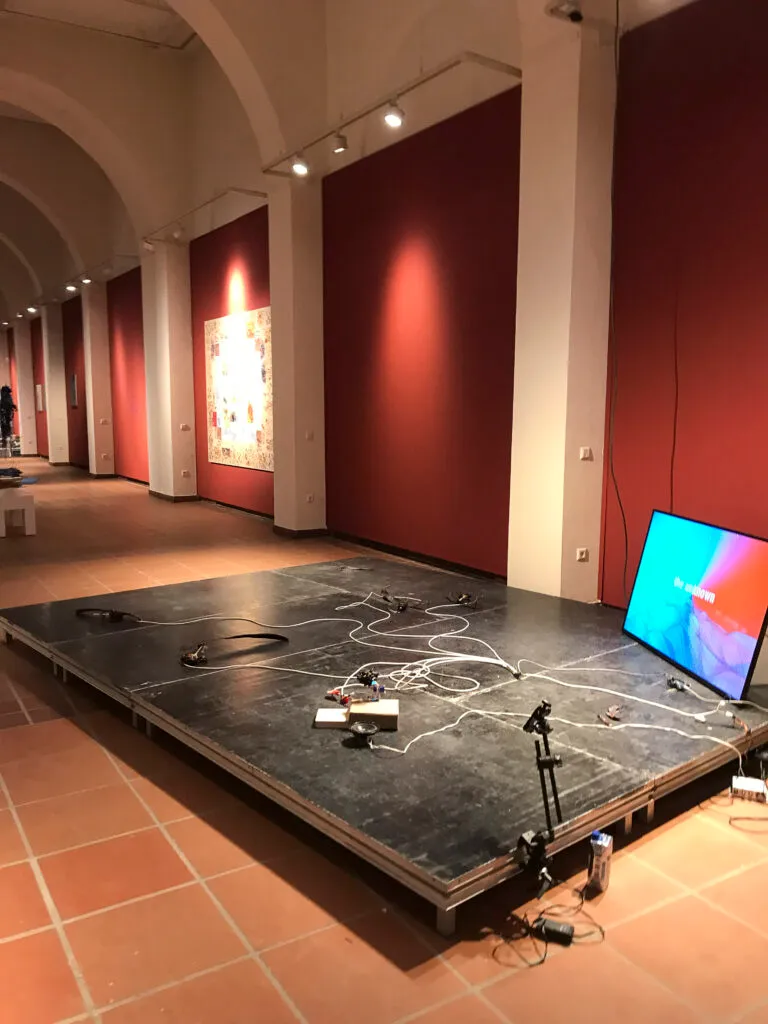
Shown at ENTER_NATURE, group exhibition at Galerie im Körnerpark, Berlin-Neukölln (November 26, 2022 – February 22, 2023), curated by Can Mileva Rastovic.
The work
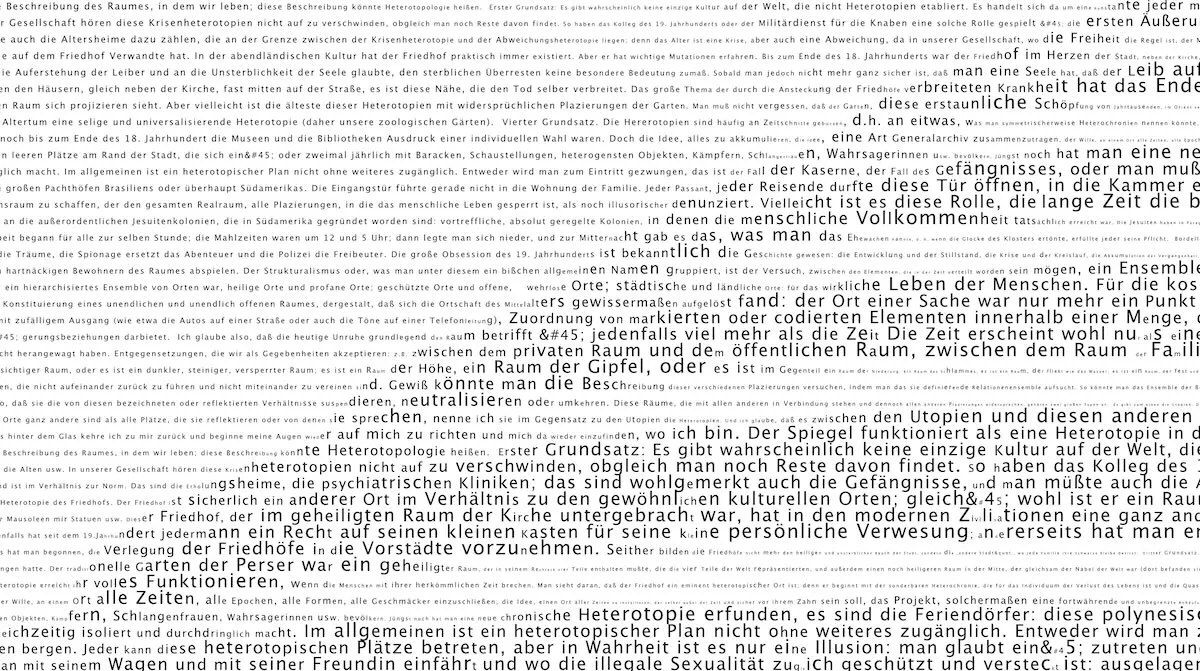
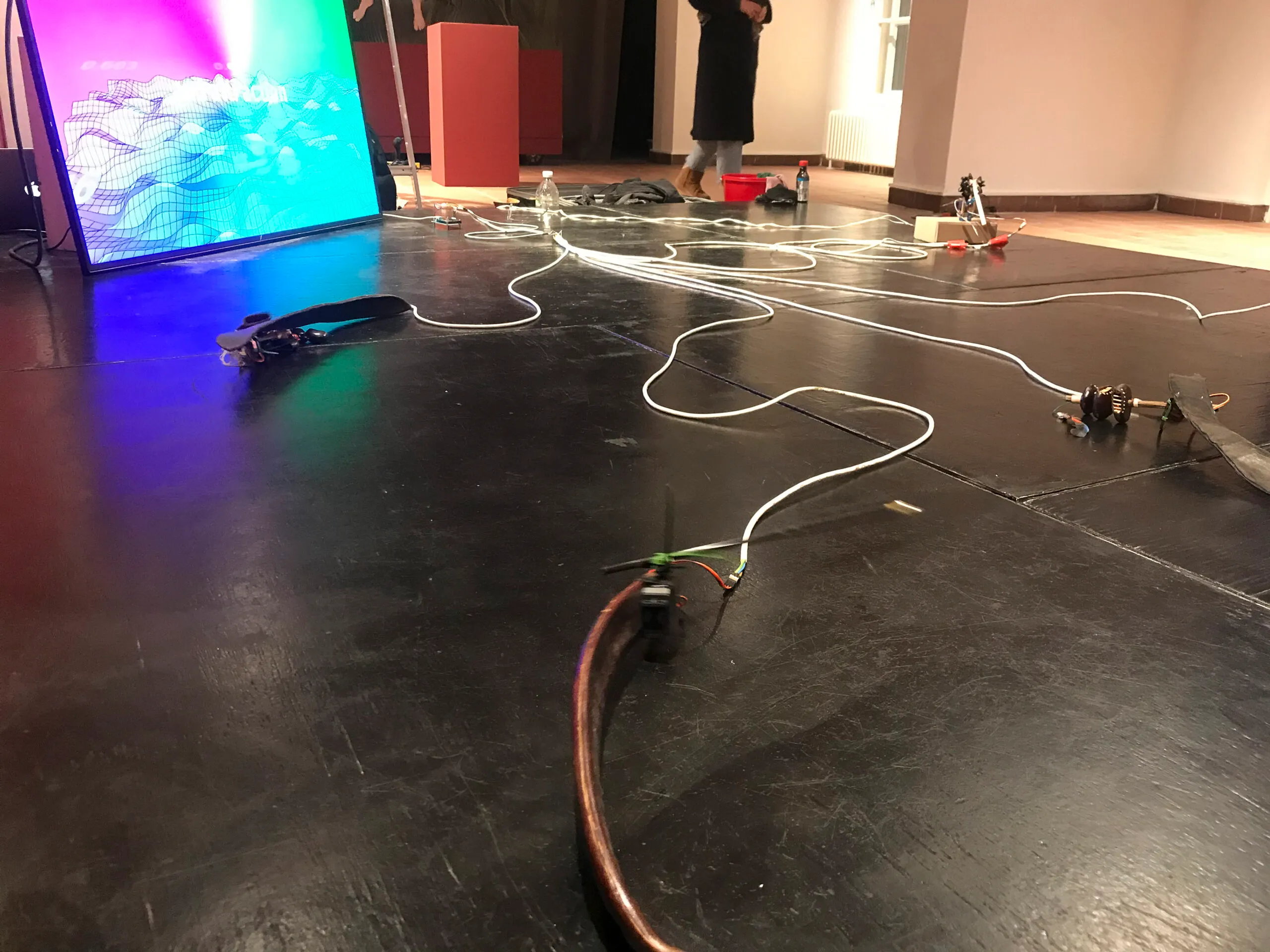
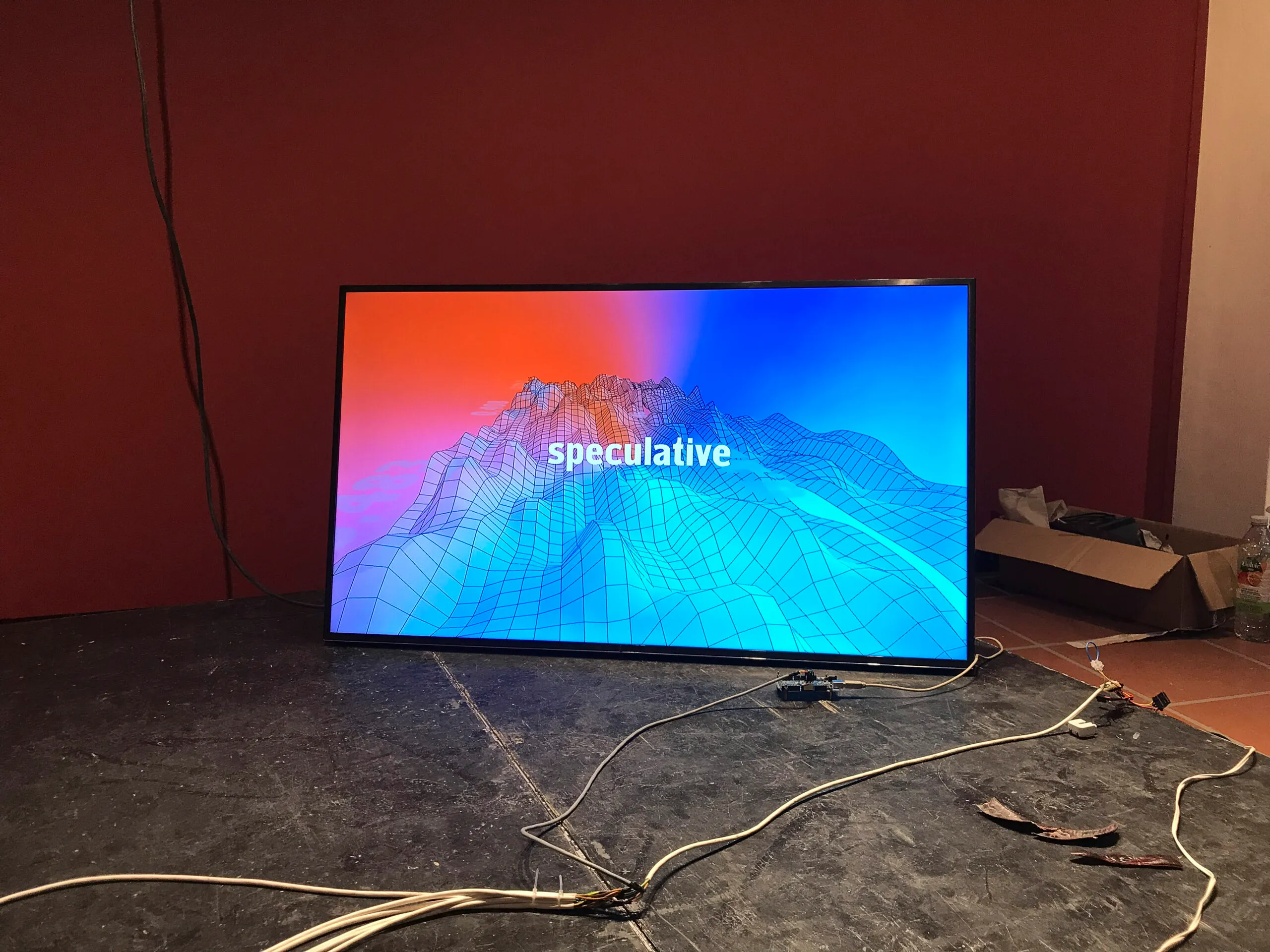
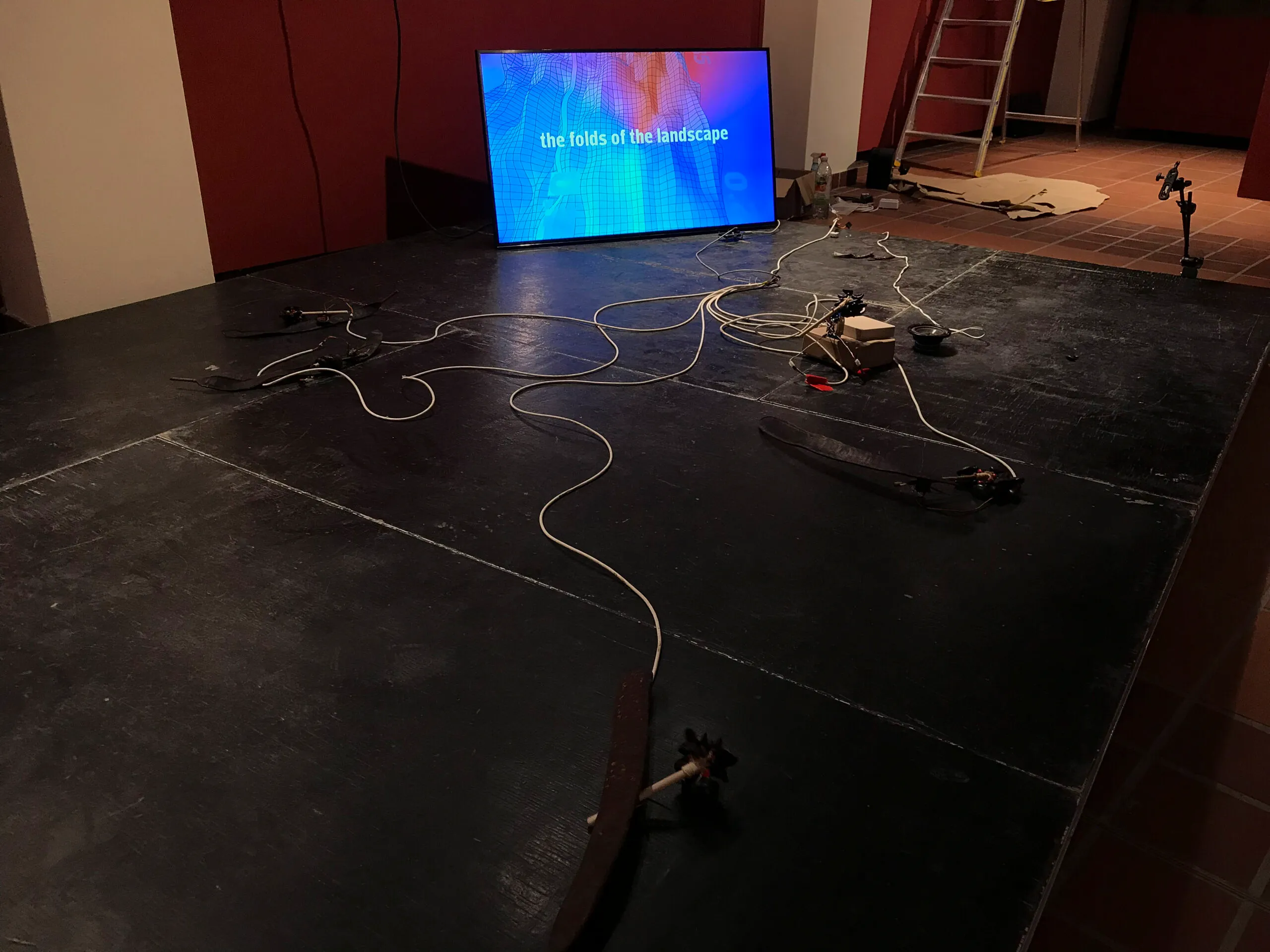
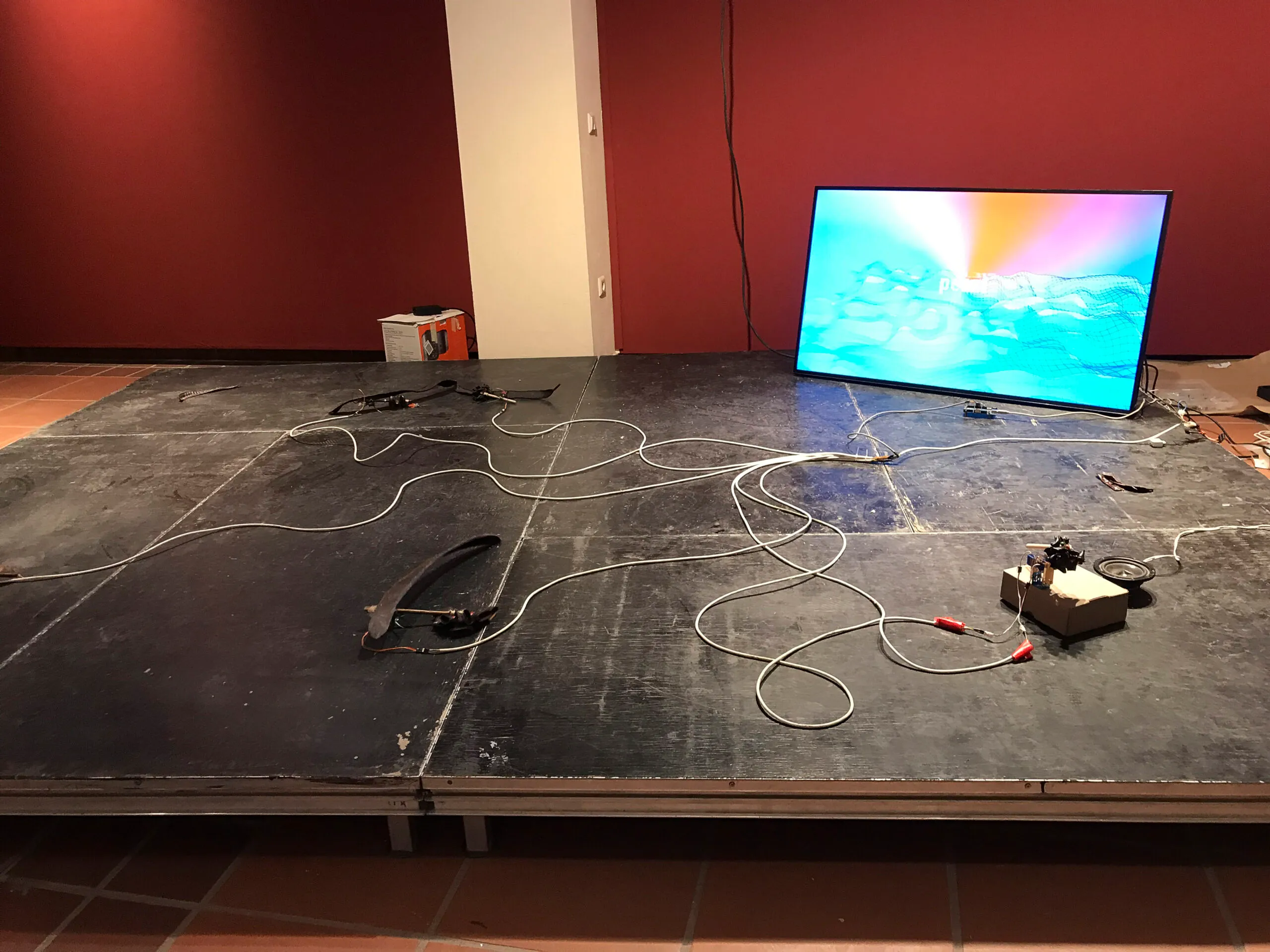
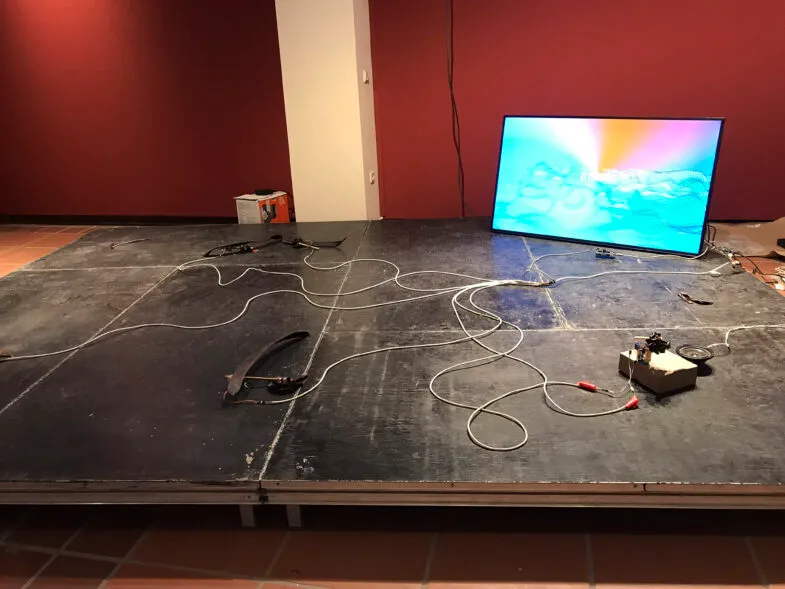
A monitor displays a 3D geometry alluding to the crossing of a mountainous landscape — a landscape that does not exist: it is synthesized in real time by the Perlin algorithm, originally developed by Ken Perlin to generate natural phenomena for the film Tron (1982).
On the floor, an arrangement of dried flame-tree seedpods and Amazonian rattles, mounted on small robots, is connected to the same data source that generates the landscape. The very series of numbers that draws the mountain on screen shakes the seeds on the floor. Two phenomenologies — synthetic landscape and organic sound texture — coincide within a single mathematical space, neither one imitating the other. The method video games use to synthesize mountains is thus joined with the acoustics of communal shamanic rituals in South America: programmatic precision and mystical repetition in one gesture.
The result is an apparently non-intentional musical composition — a kinetic sculpture that sounds by itself, a mechanical theater in which the machines do not merely execute: they live.
The layer of language
Again and again, contemplation is interrupted: the machines literally begin to speak.
Loudspeakers distributed throughout the space act as voices and enter into a dialogue with the rattles. They repeat phrases such as:
“Where are you from? Where do you come from… I mean, where are you really from?” („Woher kommst du? Wo kommst du her… Ich meine, wo kommst du wirklich her?”)
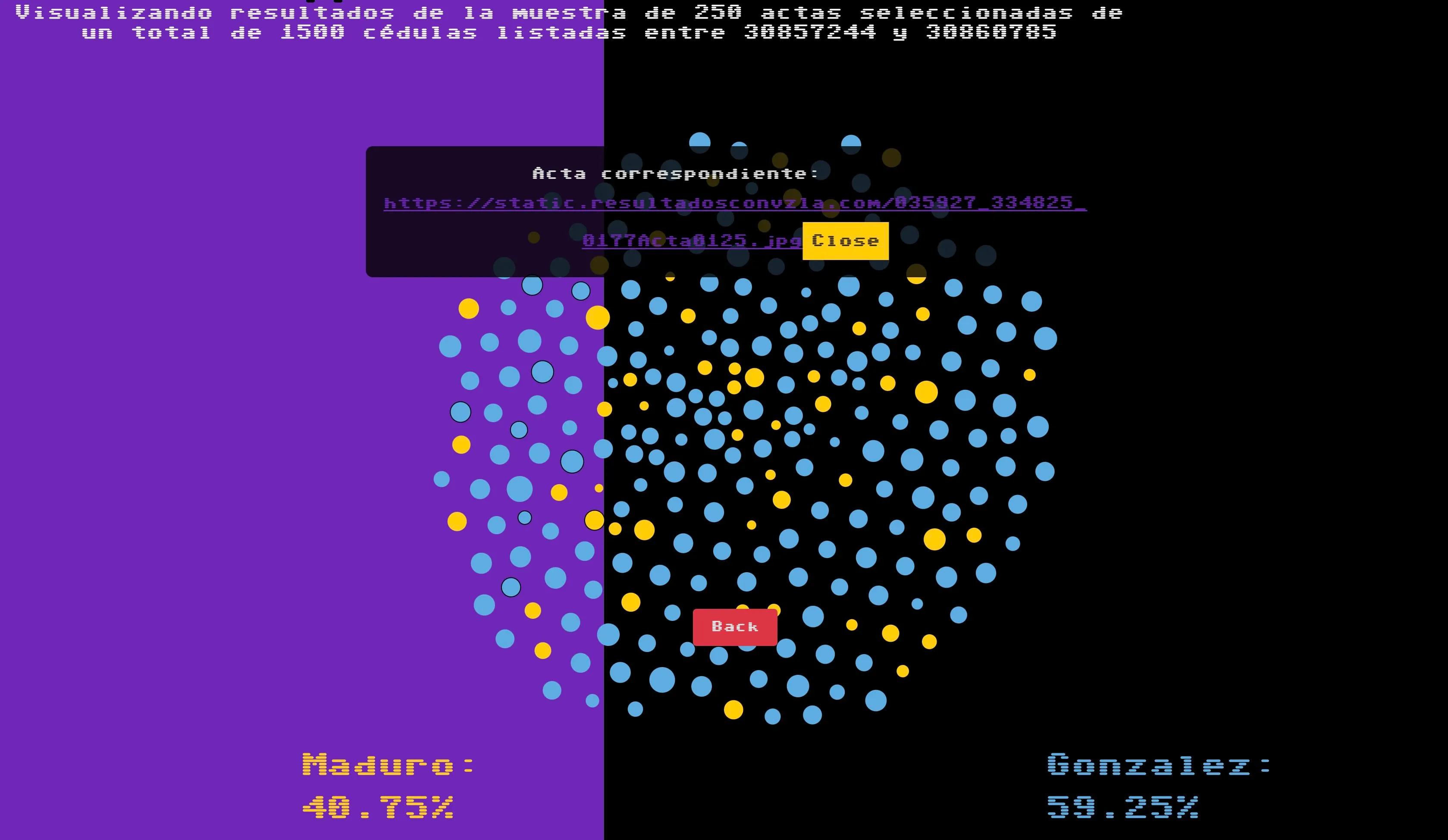
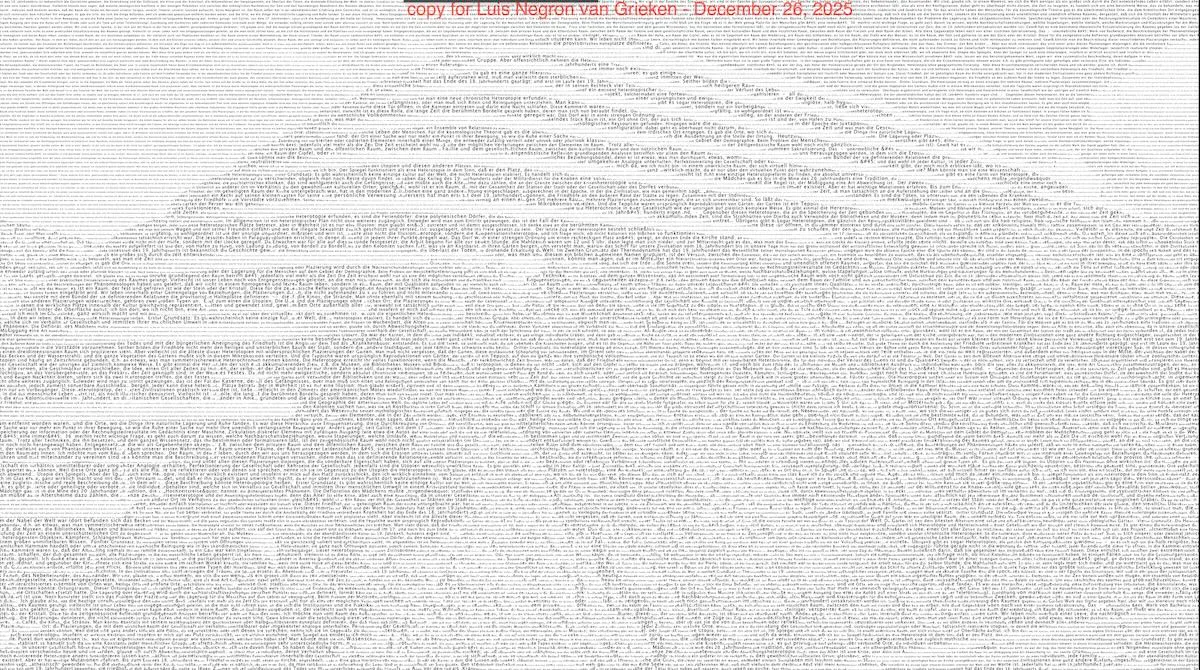
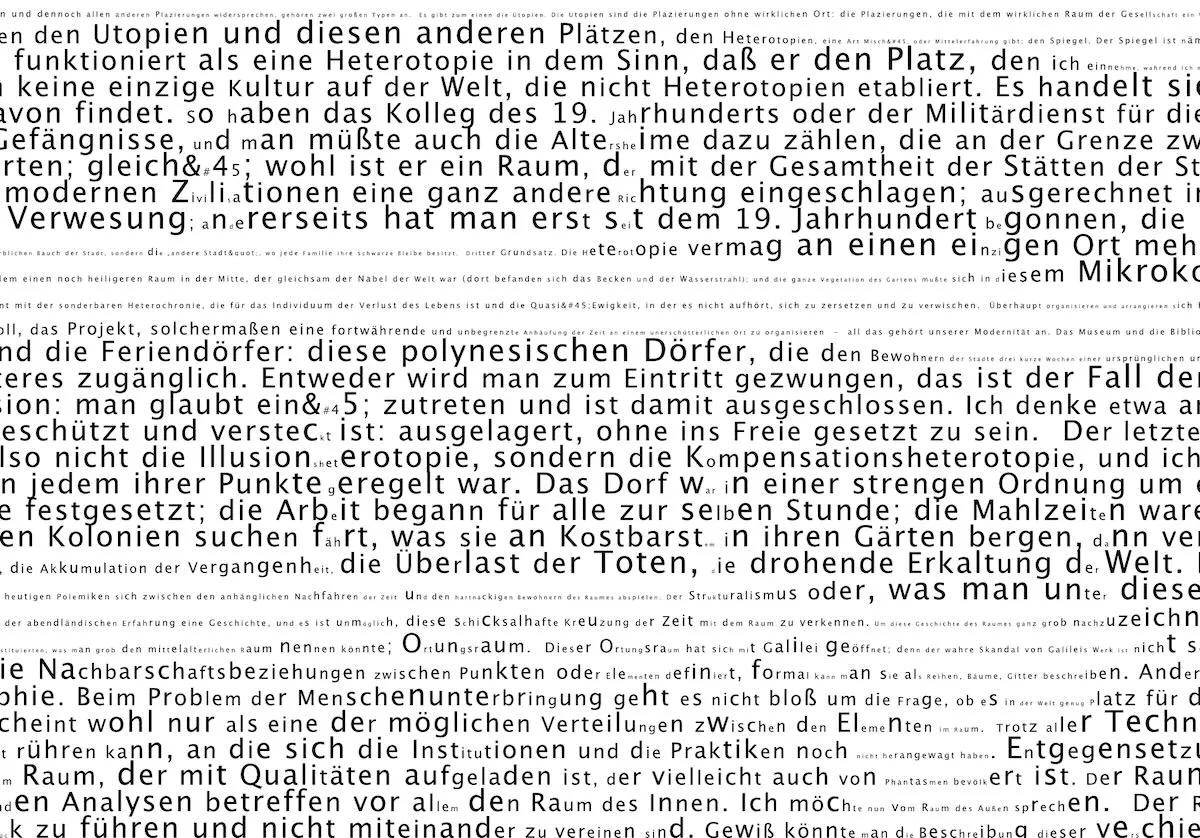
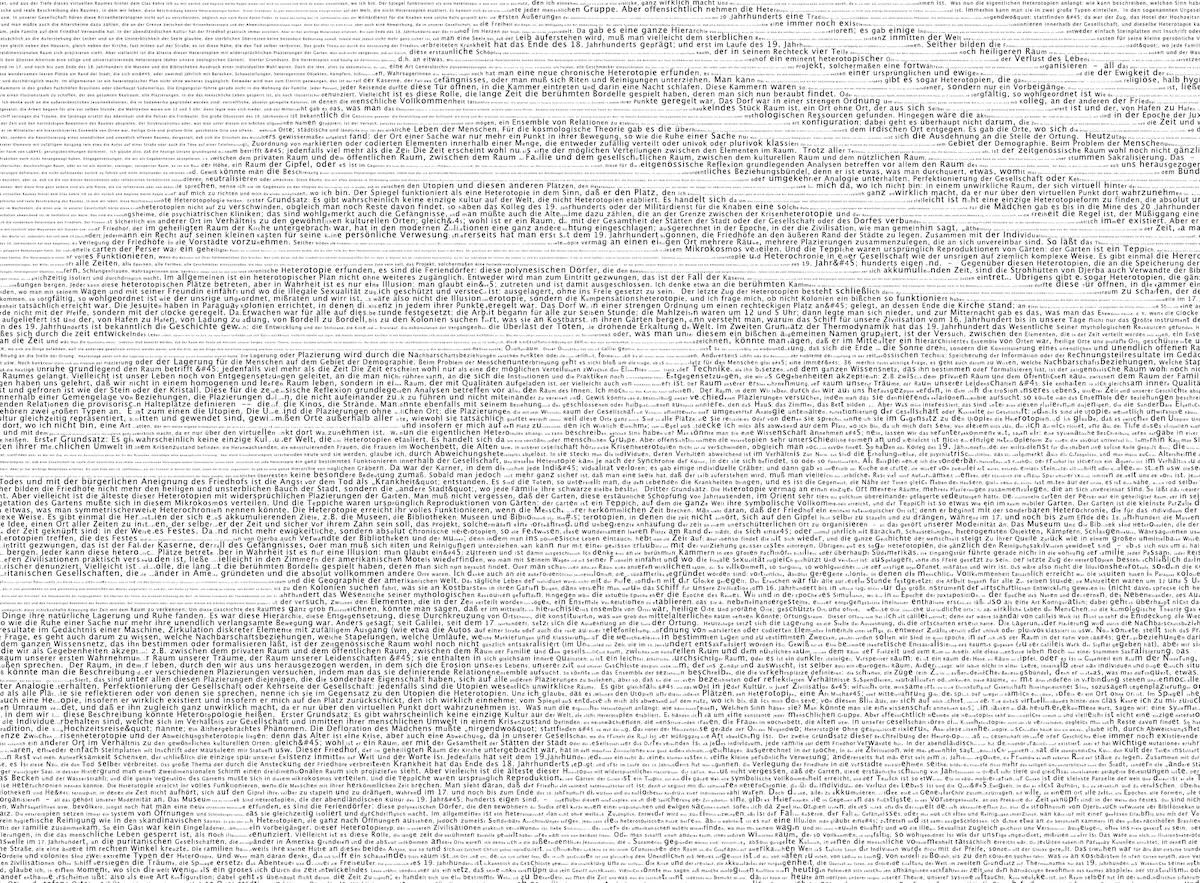
It is the question every migrant recognizes — the question never satisfied with the first answer. The rattle-robots respond to these questions with their movements: the interrogation becomes choreography, and the dialogue between synthetic voice and shaken seed becomes the dramaturgical center of the installation. Alongside the voices, a series of phrases and aphorisms on screen composes a virtual monologue that opens the piece onto another level: language as material — the question of origin addressed to objects that, like their author, were displaced from their context.
The piece floats in the spirit of the bachelor machines (Junggesellenmaschinen, from Duchamp via Deleuze/Guattari): machines with two facets, one mechanical and one invisible, beyond any specific function — machines that do not affirm the rule of the technical but sabotage it. It is also close to the talking apparatuses of Andreas Fischer (Düsseldorf), which speak somewhere between comedy and tragedy.
Migration is not a theme here: it is the epistemic condition that produces the piece. The “nature” of Ruido Perla is not a nature contemplated — it is a nature remembered through code.
The context: ENTER_NATURE
The group exhibition ENTER_NATURE examined the human relationship with nature in the post-digital era — the loss of nature, decolonization, cultural hierarchies, and virtual spaces as artistic exile — starting from the premise that “die Künstler:innen leben in einer analogen und digitalen Welt zugleich” (artists live in an analog and a digital world at once).
Participants: Julia Beliaeva, siddhartha lokanandi / Hopscotch Reading Room, Ting-Yun Kuo, Elif Saydam, Vitalii Shupliak, Niels Sievers, Traces, Luis Negrón van Grieken, Vitsche Culture Berlin.
Within that frame, Ruido Perla operated precisely at the hinge the exhibition proposed: a nature produced through code, displaced ritual objects given a voice, and a question of origin that the machine repeats without rest.
Ruido Perla (2022) — Español
Los objetos sonoros representan para mí aquel lugar entre la objetividad (de una semilla) y el anhelo de lo desconocido (lo místico a través del ritual). Aunque crecí en Sudamérica y pude tener algunas experiencias místicas, todo sigue siendo desconocido y lejano. Con mi migración a Alemania, los recuerdos se banalizaron, por un lado, y por otro surgió una perspectiva diferente que no puedo atribuir a otra cosa que a la simulación.
— Luis Negrón van Grieken
Instalación cinética y sonora Servomotores, código en Java, Arduino, computadora, monitor, cables, altavoces, vainas secas de flamboyán, maracas del Amazonas — 7 minirobots
Mostrada en ENTER_NATURE, exposición colectiva en la Galerie im Körnerpark, Berlín-Neukölln (26 de noviembre de 2022 – 22 de febrero de 2023), curada por Can Mileva Rastovic.
La obra
Un monitor muestra una geometría 3D que alude a la travesía de un paisaje montañoso — un paisaje que no existe: lo sintetiza en tiempo real el algoritmo Perlin, desarrollado originalmente por Ken Perlin para generar fenómenos naturales en la película Tron (1982).
En el suelo, una disposición de vainas secas de flamboyán y maracas amazónicas, montadas sobre pequeños robots, está conectada a la misma fuente de datos que genera el paisaje. La misma serie de números que dibuja la montaña en pantalla agita las semillas en el suelo. Dos fenomenologías —paisaje sintético y textura sonora orgánica— coinciden en un único espacio matemático, sin que ninguna imite a la otra. El método que los videojuegos usan para sintetizar montañas se une así a la acústica habitual de los rituales comunales chamánicos de Sudamérica: precisión programática y repetición mística en el mismo gesto.
El resultado es una composición musical aparentemente no intencional — una escultura cinética que suena sola, un teatro mecánico donde las máquinas no solo ejecutan: viven.
La capa de lenguaje
Una y otra vez, la contemplación se interrumpe: las máquinas empiezan, literalmente, a hablar.
Altavoces distribuidos por el espacio funcionan como voces y entablan un diálogo con las maracas. Repiten frases como:
«¿De dónde vienes? ¿De dónde eres… quiero decir, ¿de dónde vienes realmente?» („Woher kommst du? Wo kommst du her… Ich meine, wo kommst du wirklich her?”)
Es la pregunta que toda persona migrante reconoce — la pregunta que nunca se conforma con la primera respuesta. Los robots-maraca responden a estas preguntas con sus movimientos: el interrogatorio se vuelve coreografía, y el diálogo entre voz sintética y semilla agitada se convierte en el centro dramatúrgico de la instalación. Junto a las voces, una serie de frases y aforismos en pantalla componen un monólogo virtual que abre la pieza a otro nivel: el del lenguaje como material — la pregunta por el origen dirigida a objetos que, como su autor, fueron desplazados de su contexto.
La pieza flota en el espíritu de las máquinas solteras (Junggesellenmaschinen, de Duchamp vía Deleuze/Guattari): máquinas con dos facetas, una mecánica y otra invisible, más allá de cualquier función — máquinas que no afirman el dominio de lo técnico, sino que lo sabotean. Cercana también a los aparatos parlantes de Andreas Fischer (Düsseldorf), que hablan entre la comedia y la tragedia.
La migración no es aquí tema: es la condición epistémica que produce la pieza. La «naturaleza» de Ruido Perla no es una naturaleza contemplada — es una naturaleza recordada a través de código.
El contexto: ENTER_NATURE
La exposición colectiva ENTER_NATURE examinaba la relación humana con la naturaleza en la era posdigital — la pérdida de naturaleza, la descolonización, las jerarquías culturales y los espacios virtuales como exilio artístico — partiendo de que «die Künstler:innen leben in einer analogen und digitalen Welt zugleich» (las y los artistas viven a la vez en un mundo analógico y digital).
Participantes: Julia Beliaeva, siddhartha lokanandi / Hopscotch Reading Room, Ting-Yun Kuo, Elif Saydam, Vitalii Shupliak, Niels Sievers, Traces, Luis Negrón van Grieken, Vitsche Culture Berlin.
En ese marco, Ruido Perla operaba exactamente en la bisagra que la muestra proponía: una naturaleza producida por código, unos objetos rituales desplazados que reciben voz, y una pregunta por el origen que la máquina repite sin descanso.